
Beyond the Treadmill: VR Muscle Building Today
VR fitness has evolved. Early VR workouts focused on cardio like boxing, dancing, and cycling. Now, VR muscle building is emerging as a valid way to gain strength alongside traditional methods.
Many think VR is only for cardio. Its immersive nature can feel like play, but this engagement is key. For some, it's more motivating than a screen or gym weights, leading to more consistent effort.
The accessibility of VR is also improving rapidly. The Meta Quest 3, for example, offers a standalone experience without the need for a powerful PC or external sensors. This lower barrier to entry is opening up VR fitness to a much wider audience. Plus, the data tracking capabilities – calorie burn, heart rate, movement speed – can provide valuable insights into your performance.
VR isn't meant to replace the gym; it's an addition to your fitness routine. A good VR workout challenges muscles uniquely and makes tough routines more enjoyable. Find what works for you and include VR.
The Science of Virtual Strength
Muscle building relies on progressive overload: consistently challenging muscles to adapt. VR workouts can achieve this, though differently than weightlifting. The key is manipulating perceived exertion.
VR's immersive environments can make you feel like you're working harder. Your focus shifts from fatigue to the virtual experience. This isn't cheating; it uses the mind-body connection.
Muscle protein synthesis drives muscle growth. VR workouts must stimulate this through sufficient resistance, proper form, and recovery. Simply moving in VR isn't enough; you must deliberately challenge your muscles.
The long-term physiological effects of VR muscle stimulation compared to traditional methods are unclear, but early research and anecdotes are promising. VR's engagement and motivation can lead to greater consistency, a key factor for any fitness goal.
Top VR Workouts for Muscle Gain (2026)
The VR workout space is growing, with some options focusing on strength training. Here are a few, remembering that 'best' depends on your preferences and goals.
FitXR (Meta Quest, SteamVR) offers boxing, HIIT, and dance classes. Boxing workouts provide an effective upper-body challenge, and HIIT classes work the whole body. They add new content regularly.
Les Mills Bodycombat, a VR version of the popular class, is a high-energy, full-body workout with martial arts movements. It builds strength and coordination alongside cardio and endurance. The instruction is excellent, and the music motivating.
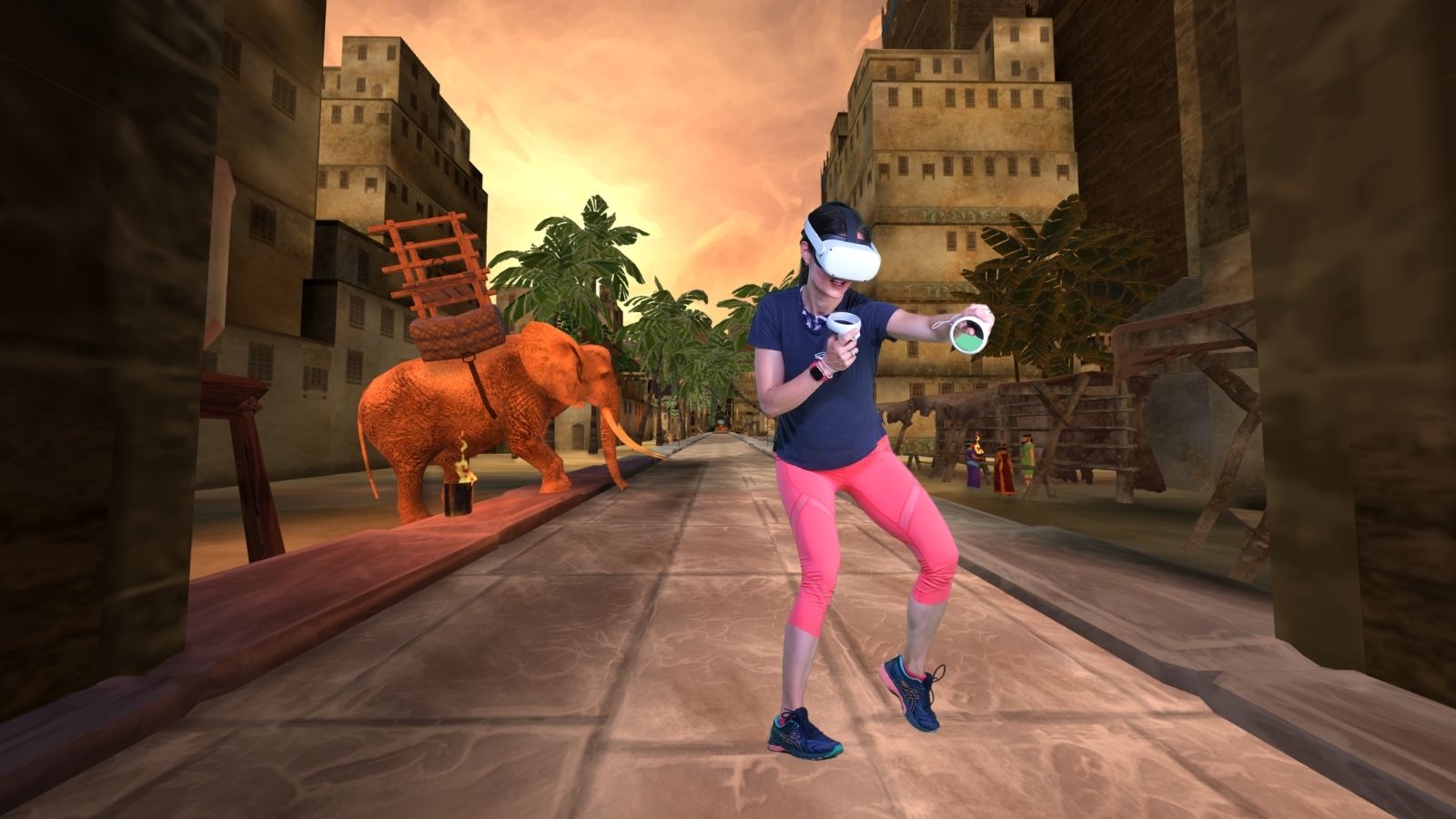
Viking Princess VR (mentioned on YouTube's Transform Your Body in 30 Days With These VR Workouts) uses fantasy environments for guided workouts. Though less polished than major titles, its workouts are challenging and effective for functional fitness and bodyweight strength.
Supernatural (Meta Quest exclusive) is a subscription service offering guided fitness in virtual environments. It focuses on overall fitness rather than specific muscle building, with intense and engaging workouts guided by your real-world movements.
Blaston is a dueling game requiring constant movement and quick reflexes. It effectively works your arms, shoulders, and core, focusing on functional strength and agility over traditional strength training.
Synth Riders isn't a muscle-building game, but its fast-paced, full-body movements offer a good workout, especially when engaging your core and legs. It's a fun way to exercise without feeling like you're working out.
Gear Up: Essential VR Equipment
Choosing a VR headset is the first step. The Meta Quest 3 is a strong option, offering a standalone experience with good tracking and a reasonable price. It's convenient as it doesn't require a PC, but battery life is limited, and the speakers are not the best.
For a more immersive experience, the Valve Index is an option, but it needs a high-end PC and base stations for tracking. It offers better tracking accuracy and a wider field of view. It's also much more expensive than the Quest 3.
Comfort is important during intense workouts. Consider a comfortable head strap and facial interface. The Elite Strap for the Quest 3 is a popular upgrade for better weight distribution and stability. Sweat guards can also help keep the headset clean.
A heart rate monitor helps track intensity and target heart rate zones. Some VR fitness apps integrate with Bluetooth monitors for real-time feedback.
Popular VR Headsets for Fitness: A Comparative Overview (2026)
| Headset Name | Resolution | Tracking Quality | Comfort | Price (approximate range) | Best For |
|---|---|---|---|---|---|
| Meta Quest 3 | 2064 x 2208 pixels per eye | Inside-out tracking; generally very accurate | Generally comfortable, improved weight distribution over previous models | $499 - $649 | Beginners to intermediate users; versatile for various workout types |
| Valve Index | 1440 x 1600 pixels per eye | External base station tracking; highly accurate and low latency | Can be less comfortable for extended use; requires base stations | $999 - $1299 (with controllers and base stations) | Intense workouts; users prioritizing maximum tracking precision |
| HTC Vive XR Elite | 1920 x 1920 pixels per eye | Inside-out tracking; offers good accuracy | Lightweight and modular design; can be used with or without the battery cradle | $1099 | Users seeking portability and a versatile headset for both fitness and general VR use |
| Pico 4 | 2160 x 2160 pixels per eye | Inside-out tracking; provides reliable performance | Front-heavy design can cause discomfort during prolonged use for some users | $399 - $499 | Budget-conscious users; good entry point into VR fitness |
Illustrative comparison based on the article research brief. Verify current pricing, limits, and product details in the official docs before relying on it.
Form and Safety in the Virtual World
VR's immersion can be a double-edged sword. It's easy to get lost in the virtual world and forget your physical body. Proper form is crucial to prevent injuries. Engage your core, keep your back straight, and avoid jerky movements.
Warm up before and cool down after your VR workout to prepare muscles and reduce soreness. Dynamic stretching is good for warm-ups, static stretching for cool-downs.
Make sure you have enough space to move around freely and clear any obstacles from your play area. A minimum of 6.5ft x 6.5ft is recommended, but more space is always better. Pay attention to your surroundings and be aware of potential hazards.
Motion sickness can be a common issue for VR newcomers. If you start to feel nauseous, stop the workout immediately and take a break. Gradually increasing your exposure to VR can help your body adapt. Experiment with different comfort settings within the VR app.
Tracking Progress and Staying Motivated
Most VR fitness apps track basic metrics like calories burned, heart rate, and workout duration. Some apps offer more advanced tracking features, such as rep counting and power output. Fitness Own provides tracking of workout data and progress toward goals, though the specifics of data visualization and analysis will vary.
To get a more comprehensive understanding of your progress, consider using a separate fitness tracker or smartwatch. These devices can provide more accurate data on your heart rate, sleep patterns, and activity levels. Syncing this data with your VR fitness app can give you a more holistic view of your fitness journey.
Setting realistic goals is essential for staying motivated. Start small and gradually increase the intensity and duration of your workouts. Celebrate your achievements along the way, and don’t be discouraged by setbacks.
Joining a VR fitness community can provide support and encouragement. There are numerous online forums and social media groups dedicated to VR fitness. Finding workout buddies can also help you stay accountable and motivated.
- Set realistic goals
- Track your progress
- Find a workout buddy
- Join a VR fitness community
- Reward yourself for achievements
Future Trends: What's Next for VR Muscle Building?
The future of VR muscle building is incredibly exciting. Advancements in haptic feedback technology will allow for more realistic and immersive workouts. Imagine feeling the resistance of weights in your virtual hands or the impact of punches in a boxing game.
Improved motion tracking will enable more precise and accurate movement capture, leading to more effective exercises. AI-powered personal trainers could analyze your form and provide real-time feedback, helping you optimize your workouts and prevent injuries.
We might see greater integration between VR fitness and other fitness technologies, such as smart home gyms and wearable sensors. This could create a seamless and personalized fitness experience. The potential for gamification is also huge – turning workouts into engaging and rewarding challenges.
I think we’ll also see a shift towards more personalized VR fitness experiences. AI could tailor workouts to your individual fitness level, goals, and preferences. The possibilities are endless, and I'm eager to see how VR continues to evolve as a powerful tool for building strength and improving overall health.
No comments yet. Be the first to share your thoughts!