

Vision Pro & Quest 4: Initial Impressions
Stepping into VR fitness with the Apple Vision Pro and Meta Quest 4 is a study in contrasts. The Quest 4 feels immediately familiar – lightweight, self-contained, and ready to go. Setup is straightforward, especially if you’ve used a Quest headset before. The Vision Pro, on the other hand, makes a statement. The build quality is undeniably premium, with a focus on materials and finish, but that comes at a cost. It’s noticeably heavier, and the external battery pack immediately introduces a sense of tethering that the Quest 4 avoids.
Comfort is a major factor, and here the Quest 4 currently has the edge. The Vision Pro’s weight distribution isn’t ideal for extended workouts, and I found myself adjusting it frequently during a 30-minute boxing session. The Quest 4, while not perfect, feels more balanced and less fatiguing. The initial setup for the Vision Pro is also more involved, requiring precise eye and hand calibration. Apple emphasizes the spatial computing aspect from the start, prompting you to scan your environment, a process that feels radically different from simply defining a playspace as you do with the Quest 4.
That spatial computing element is interesting, but it’s not immediately obvious how it benefits a typical VR fitness routine. With the Quest 4, you’re stepping into a virtual world. With the Vision Pro, Apple attempts to blend the virtual with your physical surroundings. It’s a different approach, and whether it’s an improvement for fitness is something we’ll explore later. It certainly feels more technologically ambitious, but ambition doesn’t always translate to a better workout.
Honestly, the "out of the box’ experience with the Quest 4 is just… easier. It’s designed for immediate use, and that simplicity is appealing when you just want to get moving. The Vision Pro feels like it wants to impress you with its capabilities before you even start exercising. That"s not necessarily a bad thing, but it does create a different first impression.
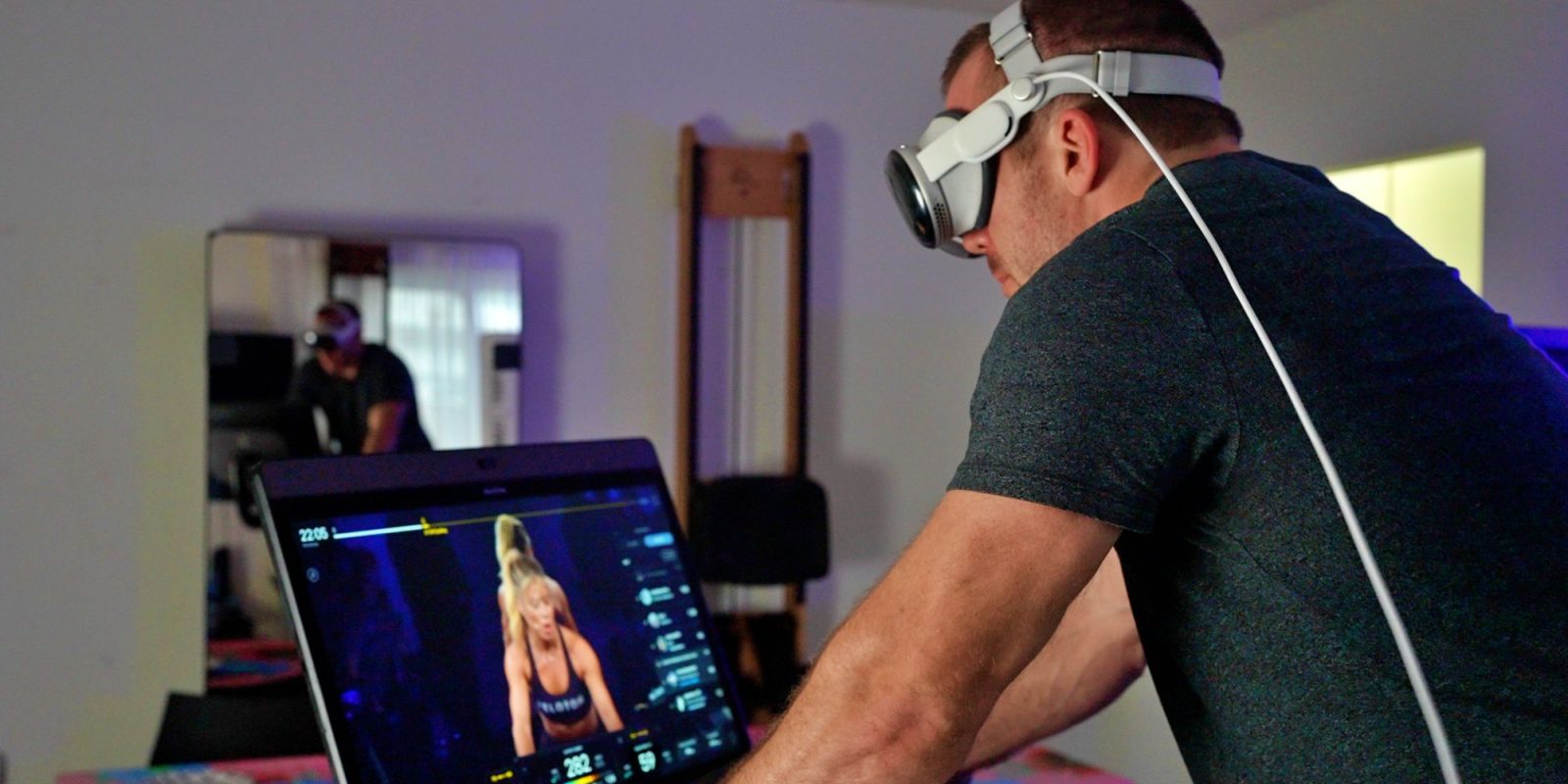
Display & Immersion: A Clear Difference?
The display is where the Apple Vision Pro attempts to truly pull ahead. Boasting a micro-OLED display with over 23 million pixels, the resolution is significantly higher than the Quest 4’s LCD panel. Apple claims this results in incredible clarity and detail. In practice, the difference is noticeable, especially with fine textures and text. However, the benefit isn’t always dramatic during fast-paced fitness activities.
For example, in a boxing game like FitXR, the increased resolution of the Vision Pro does make the virtual sparring partners look sharper, but the rapid movements mean you’re not always consciously appreciating the extra detail. Where the Vision Pro’s display really shines is in static environments, like guided meditation apps. The clarity makes the visuals more relaxing and immersive. The Quest 4’s display, while not as sharp, is still very good and perfectly adequate for most VR fitness experiences.
Refresh rate and field of view are also important. Both headsets offer a 90Hz refresh rate, which is generally smooth for VR. The Quest 4 has a wider field of view – around 110 degrees – compared to the Vision Pro’s estimated 100 degrees. This wider field of view can contribute to a greater sense of presence, particularly during activities like cycling or running in VR. It feels like you have more peripheral vision, making the virtual environment feel more expansive.
Ultimately, the impact of these display differences depends on the specific fitness app. For visually demanding experiences like exploring virtual landscapes, the Vision Pro’s higher resolution is a clear advantage. But for most VR workouts, the Quest 4’s display provides a perfectly immersive experience at a significantly lower price point. I’ve found myself focusing more on the gameplay and the physical exertion than on pixel density during intense sessions.
Tracking & Controllers: Precision for Movement
Tracking accuracy is paramount for VR fitness, and the Vision Pro and Quest 4 take very different approaches. The Quest 4 relies on inside-out tracking using onboard cameras and requires you to use controllers for most interactions. The Vision Pro, however, prioritizes hand and eye tracking, minimizing the need for physical controllers. Both systems have their strengths and weaknesses.
The Quest 4’s controller tracking is well-established and generally very reliable. It allows for precise movements and interactions, which is essential for games that require accurate swings or throws. However, some users find the controllers to be cumbersome during certain workouts. The Vision Pro’s hand tracking is impressive, allowing you to interact with the virtual environment using natural hand gestures. It feels incredibly intuitive at times, but it’s not without its limitations.
I found that the Vision Pro’s hand tracking occasionally struggled with fast or complex movements. During a virtual boxing session, it sometimes misinterprets my punches, leading to frustrating inaccuracies. The Quest 4’s controllers, while not always ideal, provided more consistent and reliable tracking in those situations. Drift can also be an issue with both systems, though it’s generally manageable. Both headsets allow you to redefine your playspace to recalibrate the tracking.
Here’s a quick comparison:
lists
- Quest 4: Controller-based tracking, precise but can be cumbersome.
- Vision Pro: Hand and eye tracking, intuitive but occasionally inaccurate with fast movements.
- Both: Subject to occasional drift, but recalibration is possible.
Apple Vision Pro vs. Meta Quest 4 for VR Fitness: A Comparative Overview (2026)
| Feature | Apple Vision Pro | Meta Quest 4 | Considerations |
|---|---|---|---|
| Tracking Method | Hand and Eye Tracking | Controllers | Hand/eye tracking offers potentially more natural movement, while controllers are well-established and widely supported. |
| Tracking Accuracy | Generally Higher | Good | Vision Pro’s spatial awareness aims for precise tracking, but real-world performance will determine its advantage. |
| System Latency | Potentially Lower | Moderate | Lower latency is crucial for responsive workouts. Vision Pro’s processing power *may* deliver this, but depends on app optimization. |
| Boxing Suitability | Better for Form Focus | Well-Supported | Vision Pro’s hand tracking could allow for more precise punch tracking and form correction. Quest 4 has a mature boxing game library. |
| Cycling Suitability | Immersive Experience | Good with Accessories | Vision Pro’s spatial video pass-through could enhance outdoor cycling simulations. Quest 4 requires accessories for a comparable experience. |
| Yoga & Mindfulness | Strong Potential | Good | Vision Pro’s focus on spatial computing could create very immersive and calming yoga/mindfulness environments. Quest 4 has existing apps in this space. |
| Strength Training | Emerging Support | Established Ecosystem | Strength training apps are developing for Vision Pro, but Quest 4 currently has a larger selection of dedicated fitness titles. |
| Overall Immersion | Higher Potential | Very Good | Vision Pro’s mixed reality capabilities *could* offer a deeper sense of presence, but this is dependent on app development and user preference. |
Qualitative comparison based on the article research brief. Confirm current product details in the official docs before making implementation choices.
Fitness App Ecosystems: Where You’ll Sweat
The app ecosystem is a critical component of any VR fitness headset, and the Meta Quest 4 currently has a significant advantage. It’s been on the market longer and has attracted a larger number of developers, resulting in a more mature and diverse library of fitness apps. Supernatural is a standout, offering beautifully designed workouts with a focus on rhythm and music. FitXR provides a wide variety of classes, including boxing, HIIT, and dance. Les Mills Bodycombat brings the popular fitness classes into VR.
The Apple Vision Pro’s app ecosystem is still in its early stages. While Apple is actively courting developers, the selection of fitness apps is currently limited. TRIPP is a meditation and mindfulness app that leverages the Vision Pro’s immersive display, while Lungy offers calming virtual spaces for relaxation and breathing exercises. The App Store lists a small but growing number of health and fitness apps specifically designed for Vision Pro, but it’s nowhere near the breadth of options available on the Quest 4.
The quality of the experiences also varies. The Quest 4’s established apps are generally polished and well-optimized for VR fitness. The Vision Pro’s apps are still evolving, and some feel a bit rough around the edges. However, the Vision Pro’s spatial computing capabilities open up new possibilities for fitness apps. Imagine a virtual personal trainer who can analyze your form in real-time and provide personalized feedback.
Here are some links to explore:
lists
- Meta Quest Store:
- Apple App Store (Health & Fitness):
- Supernatural (Quest):
- FitXR (Quest):
Essential VR Fitness Accessories for Apple Vision Pro & Meta Quest 4

Includes removable facial interface frame, foam face covers, and anti-leakage nose pad. · Designed for Oculus Meta Quest 2. · Provides a comfortable and hygienic VR experience.
This set offers improved comfort and hygiene for your VR fitness sessions on the Meta Quest 2.

Upgraded controller grips protector compatible with Oculus/Meta Quest 3/3S. · Non-slip handle cover with battery opening. · Enhances grip and protects controllers during active use.
These grips ensure a secure hold on your controllers, preventing drops and enhancing control during intense VR workouts.

Rechargeable battery head strap compatible with Meta Quest 3. · Features an air cooling system and hot-swappable battery pack. · Provides extended gaming sessions with added comfort and cooling.
This head strap offers extended playtime and comfort, crucial for longer VR fitness routines.

Face cushion pad made of PU leather foam. · Replacement for Meta Quest 2 VR facial interface. · Offers a soft and sweat-resistant surface for comfort.
This PU leather foam cushion provides a more comfortable and easily cleanable interface for your Meta Quest 2 during workouts.

Lens protector cover compatible with multiple VR headsets including Meta Quest 3/2/1 and Vision Pro. · Protects lenses from sunlight, scratches, and dust. · Helps maintain lens clarity for optimal visual performance.
Protecting your headset lenses is essential for maintaining clear visuals, especially during active VR fitness use.
As an Amazon Associate I earn from qualifying purchases. Prices may vary.
Spatial Computing & Fitness: Vision Pro's Edge?
Apple heavily promotes the Vision Pro’s spatial computing capabilities, and it’s tempting to see how this could revolutionize VR fitness. The idea is to seamlessly integrate virtual elements into your physical environment, creating a more immersive and engaging workout experience. Imagine a yoga instructor appearing in your living room, guiding you through poses as if they were actually there. Or a virtual running track that overlays your existing surroundings.
The YouTube demos showcase some of this potential, but the reality is more nuanced. While the Vision Pro can map your room and incorporate it into the VR experience, the integration isn’t always seamless. The virtual elements can sometimes feel disjointed from the physical environment, breaking the illusion of presence. The technology is promising, but it’s still in its early stages.
I experimented with a few spatial computing-enabled fitness apps, and I found that the benefits were most noticeable in activities that involve precise movements and spatial awareness. For example, a virtual boxing app that uses your room as the arena can be more engaging than a traditional VR boxing experience. However, the limitations of the hand tracking sometimes hindered the experience.
Another potential application is remote personal training. A virtual trainer could analyze your form in real-time and provide feedback based on your movements. This could be particularly useful for exercises that require proper technique, like weightlifting or Pilates. However, the Vision Pro’s camera quality and tracking accuracy would need to improve to make this a truly viable option. For now, spatial computing feels more like a glimpse of the future than a fully realized fitness feature.
Battery Life & Practicality
Battery life is a significant concern for both headsets, but the Vision Pro’s external battery pack is a particularly limiting factor for fitness. Having a cable running from the headset to your pocket or waist is disruptive and can interfere with your movements. Apple claims the external battery provides up to two hours of general use, but intense VR workouts will likely drain it faster.
The Quest 4, on the other hand, has an integrated battery that provides around 1.5 to 3 hours of playtime, depending on the app and settings. While this isn’t ideal for marathon workout sessions, it’s significantly more convenient than the Vision Pro’s external battery. Both headsets can be used while charging, but that introduces another cable to contend with.
Heat management is also a consideration. Both headsets can get warm during intense exercise, but the Vision Pro seems to run hotter. The external battery pack adds to the heat buildup, making it uncomfortable to wear for extended periods. The Quest 4’s ventilation system is slightly more effective at dissipating heat, but it’s still not perfect.
Here's a quick checklist for practicality:
lists
- Vision Pro: External battery pack, up to 2 hours, potential for overheating.
- Quest 4: Integrated battery, 1.5-3 hours, can get warm during intense workouts.
- Both: Can be used while charging, but requires a cable.
Price & Value: The Bottom Line
The Apple Vision Pro starts at $3,500, making it significantly more expensive than the Meta Quest 4, which retails for $299 - $499 depending on storage capacity. This price difference is substantial and needs to be carefully considered when evaluating these headsets for VR fitness. For the cost of a single Vision Pro, you could buy multiple Quest 4s and still have money left over for apps and accessories.
The Vision Pro’s higher price tag is justified by its advanced display technology, spatial computing capabilities, and premium build quality. However, these features don’t necessarily translate to a better VR fitness experience. The Quest 4 offers a perfectly capable and immersive VR fitness experience at a fraction of the cost. The total cost of ownership also needs to be considered. In addition to the headset itself, you’ll need to factor in the cost of apps, accessories, and potentially a more powerful computer if you plan to use PC VR apps.
The long-term value of the Vision Pro is uncertain. Apple may release more affordable models in the future, and the spatial computing features may become more useful over time. However, for most people, the Quest 4 offers a better value proposition for VR fitness right now. It’s a more affordable, accessible, and well-rounded solution.
I think it's fair to say that unless you're an early adopter with deep pockets, the Quest 4 is the more sensible choice for anyone primarily interested in VR fitness.
2026 Outlook: What's Next for VR Fitness?
The VR fitness landscape is rapidly evolving, and the next few years promise to be exciting. Apple is likely to release a more affordable Vision Pro model, potentially addressing the price barrier that currently limits its appeal. Meta will undoubtedly continue to improve the Quest platform, focusing on areas like tracking accuracy, display quality, and battery life.
I anticipate advancements in tracking technology, such as more accurate hand and eye tracking, as well as the integration of biometric sensors to monitor heart rate, calories burned, and other fitness metrics. Display technology will also continue to improve, with higher resolutions, wider fields of view, and faster refresh rates.
The development of new fitness apps will be crucial. We’ll likely see more apps that leverage spatial computing to create immersive and engaging workout experiences. I expect to see more personalized fitness programs that adapt to your individual needs and goals. The integration of AI could also play a role, providing real-time feedback and motivation.
While VR fitness is still in its early stages, it has the potential to transform the way we exercise. It offers a fun, immersive, and convenient way to stay active. The future looks promising, and I’m excited to see what innovations the next few years will bring. However, it's important to remember that VR fitness is not a replacement for traditional exercise, but rather a complementary tool to help you achieve your fitness goals.
No comments yet. Be the first to share your thoughts!