
Testing the AI coach
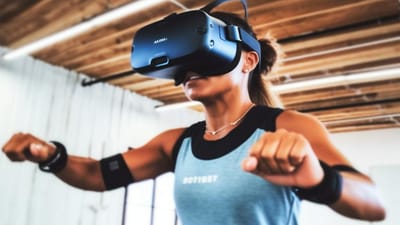
Virtual reality fitness is gaining traction, but the introduction of AI-powered personal trainers feels like a genuine leap forward. DiscoVR Tetiana’s recent video, “I Let AI Control My Workouts in VR… It Got Weird,” offers a fascinating – and slightly unsettling – glimpse into this emerging world. She tested Train Together, an app aiming to be both trainer and assistant, and her initial reaction was…mixed. It’s easy to get caught up in the futuristic appeal, but I’m immediately skeptical. Does this actually improve a workout, or is it just a clever gimmick riding the AI wave?
Tetiana’s video shows the AI adapting to her movements, offering encouragement, and attempting to guide her through exercises. The system seems to react to her performance in real-time, adjusting the intensity and offering corrections. However, the “weird” part, as she points out, comes from the uncanny valley effect of interacting with an AI that’s trying to mimic human coaching. It’s a little too eager, a little too perfect, and ultimately, a little unnerving. This highlights a core challenge for AI in fitness: replicating the nuance and empathy of a good human trainer.
The question isn't whether the technology can do these things, but whether it can do them well. A lot of VR fitness already exists – games like Beat Saber and Supernatural provide excellent workouts. But those rely on pre-programmed routines. Train Together, and systems like it, promise something more: a truly personalized experience that adapts to your individual needs and goals. That's a big claim, and one that requires careful examination. We'll look beyond the hype to see what’s actually on offer.
Moving beyond basic motivation
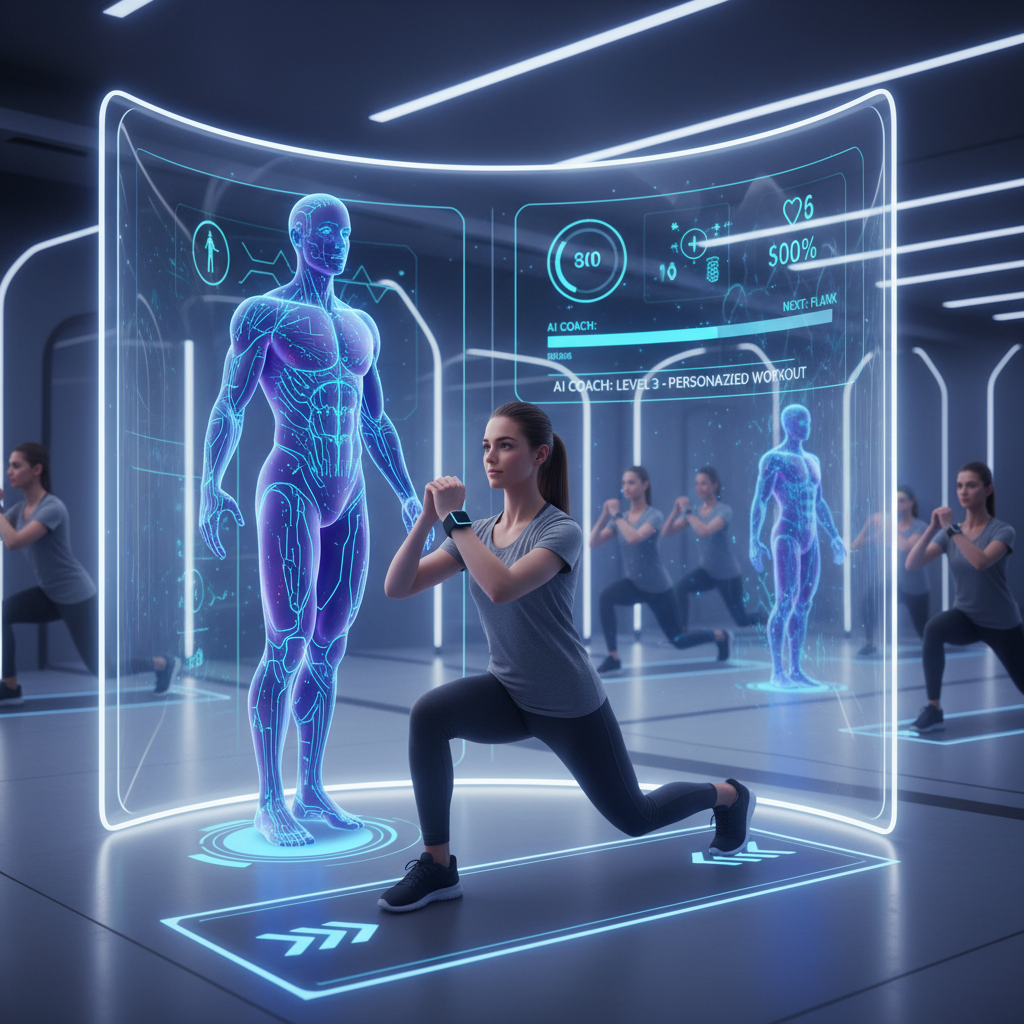
The most basic function of an AI fitness trainer is motivation, but that’s where the similarities to traditional VR fitness end. While games primarily focus on making exercise fun, these AI systems aim to make it effective. They go beyond simply counting reps and tracking calories. Train Together, and similar apps, are designed to analyze your form, adjust the difficulty of your workout on the fly, and create personalized routines tailored to your fitness level and objectives.
The app watches your form. If your back isn't straight during a squat, the AI tells you immediately. Pre-programmed videos can't do that. It also bumps up the resistance as you get stronger so you don't get stuck doing the same easy reps every week.
Personalized workout generation is where the AI really shines. Instead of following a generic routine, the trainer creates a workout specifically for you, based on your goals – whether it’s weight loss, muscle gain, or improved endurance. The AI can also take into account your fitness level, any injuries you may have, and your preferred exercise styles. This level of customization is simply not possible with traditional fitness methods. It's a shift from reacting to your performance to proactively shaping it.
Finally, real-time feedback is constant. It’s not just about correcting mistakes; it’s about reinforcing good form and providing encouragement. This constant stream of information helps you stay engaged and motivated, and also improves your awareness of your own body. It's a far cry from watching a pre-recorded instructor on a screen.
The data behind the headset
At its heart, an AI-powered VR fitness trainer is a sophisticated data processing system. It relies on a variety of sensors to collect information about your movements and physiological state. The VR headset itself is the primary data source, tracking your head and hand movements with impressive accuracy. This data is used to create a 3D model of your body and track your form during exercises.
Heart rate monitors, often integrated into chest straps or wristbands, provide additional data about your exertion level. Looking ahead, we might see integration with EMG sensors – electromyography – which measure muscle activity directly. This would provide even more detailed information about your form and effort. All of this data is then fed into an AI algorithm, typically a form of machine learning.
These algorithms are trained on massive datasets of human movement, allowing them to identify patterns and predict how your body should be moving during different exercises. Computer vision techniques are used to analyze the visual data from the headset, recognizing your joints and limbs and tracking their position in space. The AI then compares your movements to the ideal form and provides feedback accordingly. The entire process happens in real-time, creating a dynamic and interactive training experience.
The promise of better form
The potential for AI to improve form is, in my opinion, the most compelling aspect of this technology. Incorrect form is a leading cause of injuries, and even minor adjustments can significantly improve workout effectiveness. Traditional personal trainers excel at this, providing individualized guidance and correcting mistakes in real-time. The goal of AI trainers is to replicate that expertise.
However, accurately capturing human motion in VR is incredibly challenging. Headset tracking isn’t perfect, and it can be difficult to accurately determine the position of all your joints. AI algorithms can help overcome these limitations by filling in the gaps and making inferences based on the available data. They can also filter out noise and compensate for tracking errors. But the quality of the feedback depends heavily on the accuracy of the underlying data.
Based on what I’ve seen, current systems are still imperfect. Tetiana’s video shows the AI sometimes offering feedback that’s slightly off or irrelevant. It’s getting better, but it’s not yet at the level of a skilled human trainer. Still, even imperfect feedback can be valuable, helping you become more aware of your form and identify areas for improvement. The benefit of real-time feedback is that it allows you to correct mistakes immediately, reinforcing good habits and preventing injuries. This is a huge advantage over waiting until after a workout to receive feedback.
- Accuracy depends entirely on the headset sensors.
- Real-time corrections help you fix habits before they set in.
- Better form means fewer injuries.
Personalization and Adaptability
Beyond form correction, AI trainers excel at personalization. Dynamic difficulty scaling is a core feature, ensuring that workouts are challenging enough to be effective but not so difficult that they’re discouraging. The AI constantly monitors your performance and adjusts the intensity, resistance, or repetitions accordingly. This prevents plateaus and keeps you progressing towards your goals.
Workout variety is another important aspect of personalization. The AI can draw from a vast library of exercises and create routines that target different muscle groups and movement patterns. It can also take into account your preferences, incorporating exercises you enjoy and avoiding those you dislike. This is a major advantage over pre-programmed workouts, which can become repetitive and boring.
The ultimate goal is 'adaptive training' – a system that learns your individual responses to exercise and customizes your workout plan accordingly. This goes beyond simply adjusting the difficulty; it involves understanding your strengths and weaknesses, your recovery patterns, and your motivational triggers. Imagine a future where your AI trainer anticipates your needs and creates a workout that’s perfectly tailored to your current state. It's a compelling vision, but one that requires significant advancements in AI and data analysis.
FitXR and the Metaverse Angle
FitXR is actively exploring the integration of AI into its VR fitness platform. Their website highlights the potential of AI to “unlock metaverse training benefits”. While the term "metaverse" is often overused, in this context it refers to the potential for social interaction and community within VR fitness. FitXR envisions a future where you can work out with friends, compete against others, and receive guidance from AI-powered coaches – all within a shared virtual environment.
This is a different approach than Train Together, which seems to focus primarily on individual training. FitXR is betting on the power of social connection to enhance motivation and engagement. It’s a smart move, as social interaction is a key driver of adherence to fitness programs. However, it’s important to be realistic about the metaverse hype. While the potential is there, the metaverse is still in its early stages of development and it’s unclear how quickly it will gain widespread adoption.
The integration of AI into these social VR experiences could be transformative, creating a truly immersive and personalized fitness ecosystem. But it’s crucial to remember that technology is just a tool. The success of these platforms will ultimately depend on their ability to create engaging and effective workouts, and to foster a sense of community among their users.
The Privacy Question
Collecting and analyzing biometric data in VR raises significant privacy concerns. These AI trainers are gathering a wealth of information about your movements, your heart rate, and potentially even your muscle activity. This data could be used to create a detailed profile of your physical fitness, your exercise habits, and even your health status. It’s essential to understand how this data is being collected, used, and protected.
Train Together and FitXR aren't always clear about where your biometric data goes. You're giving these apps your heart rate and movement patterns. If that data leaks or gets sold to insurance companies, it becomes a permanent record of your physical health that you can't take back.
To protect your privacy, carefully review the privacy policies of any VR fitness app you use. Consider using a VPN to encrypt your internet connection and limit data tracking. Be mindful of the permissions you grant to these apps, and only share the data that’s necessary for them to function. It’s a crucial discussion that often gets overlooked in the excitement around new technology. We need robust regulations and ethical guidelines to ensure that our privacy is protected in the age of AI-powered VR fitness.

No comments yet. Be the first to share your thoughts!